-
Cut the bases
Cut 3 mm MDF into strips 200 by 60 mm. Round the corners so sections butt together on the table.
Bench tip. Bevel the long edges at 45 degrees and the join between sections disappears.
-
Shape the earth bank
Glue 25 mm foam on with PVA. Carve a rounded bank, wider at the foot than at the top.
Bench tip. Carve outdoors or wear a mask; foam dust gets everywhere.
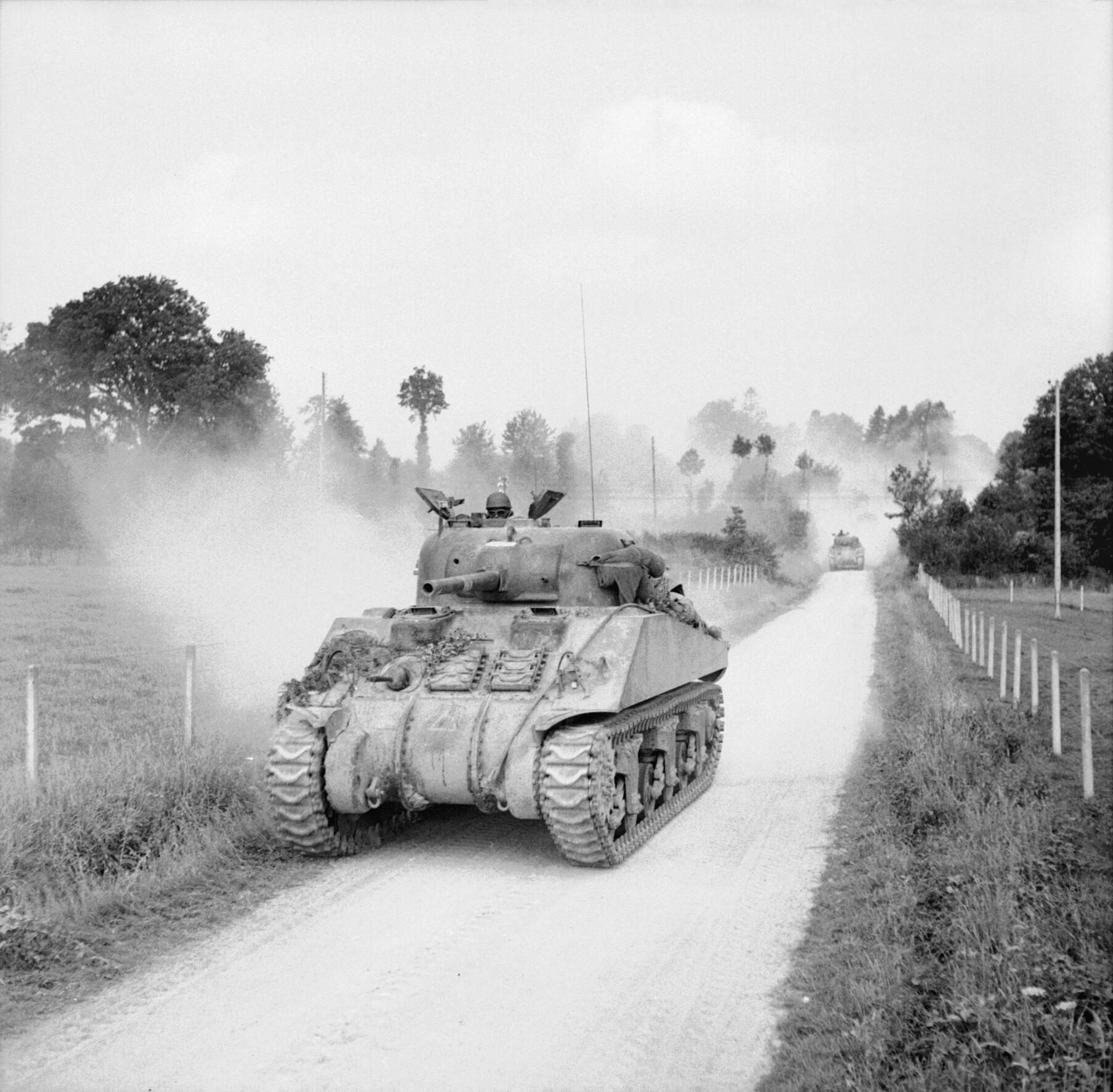
Reference: Shermans advancing between Normandy hedgerows near Vire, 2 August 1944. Not our build. Photo: Sgt Laing, No 5 Army Film & Photographic Unit, Public domain -
Texture
Brush PVA over the bank, sprinkle on fine sand and small stones, and leave it overnight.
-
Base colours
Paint dark brown all over, then two lighter dry-brushes. Pick the stones out in grey.
Bench tip. Dry-brush outwards so the raised texture catches the light, not the hollows.
-
Hedge and trees
Tear clump foliage into rough lumps and glue it along the top of the bank with a thinned PVA mix (about 5 parts glue to 1 part water is a ratio several published bocage tutorials use). Push in real twigs for trunks.
Bench tip. Finish and foliage one side of the hedge, let it dry for a few days, then do the other side; the extra weight can collapse the bank before the glue has set.
-
Finish
Add static grass along the foot of the bank, then seal with matt varnish outdoors or in a well-ventilated space.
Bench tip. A light overspray of 50/50 water and PVA across the foliage, in place of or alongside varnish, is a step some published bocage tutorials use specifically to stop clump foliage shedding over time.
Build Guide · beginner
Bocage hedgerow for a 28mm table
Six sections, about 1.2 metres in all. Method and materials follow the published bocage-terrain tutorials in the sources below; we have not built this piece ourselves. Also works for 1:72.
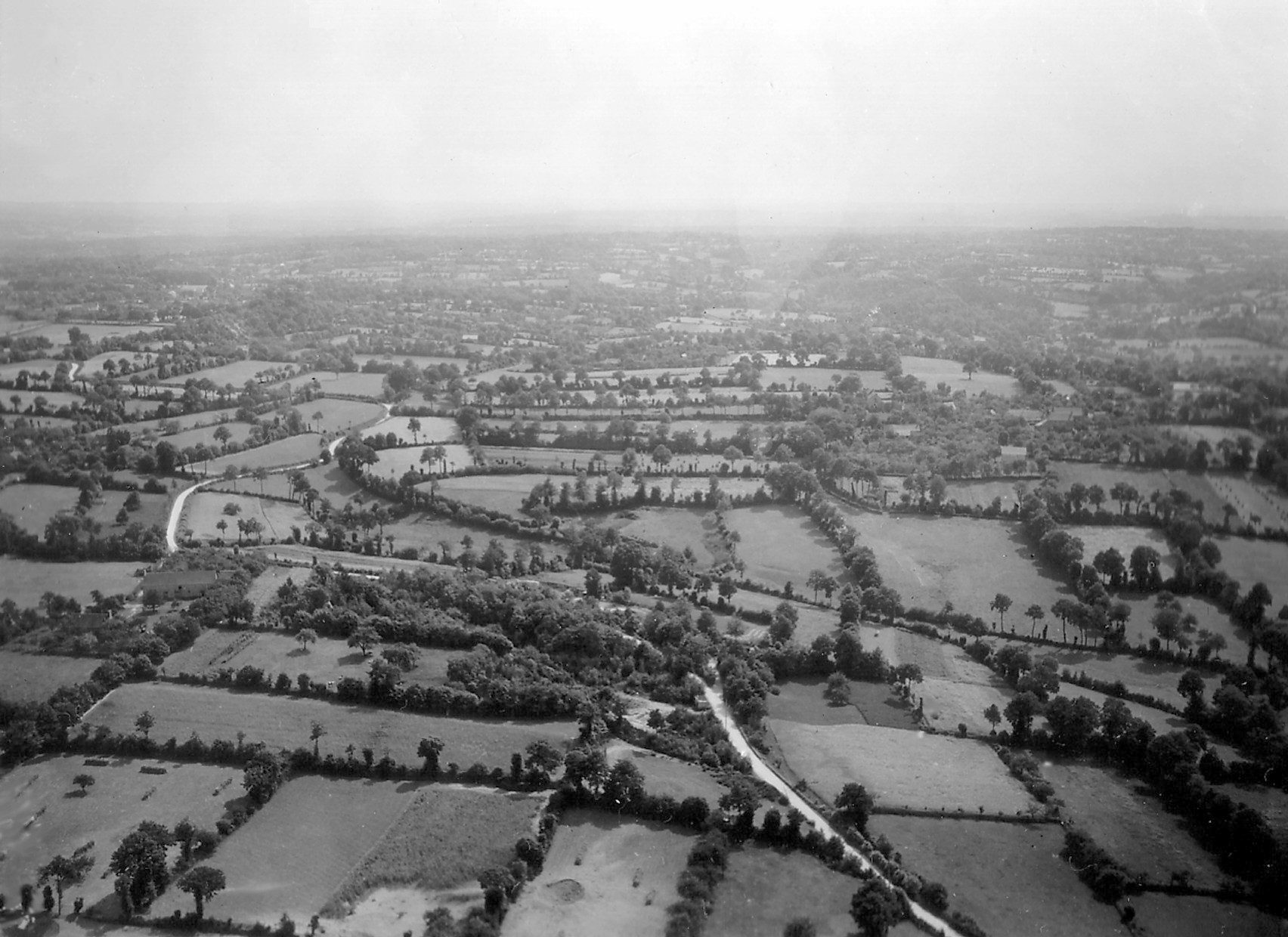
- Level
- Beginner, 1 of 5
- Scales
- 28mm, 1:72
- Output
- 6 sections, about 1.2 m total
Researched method, not a tested build